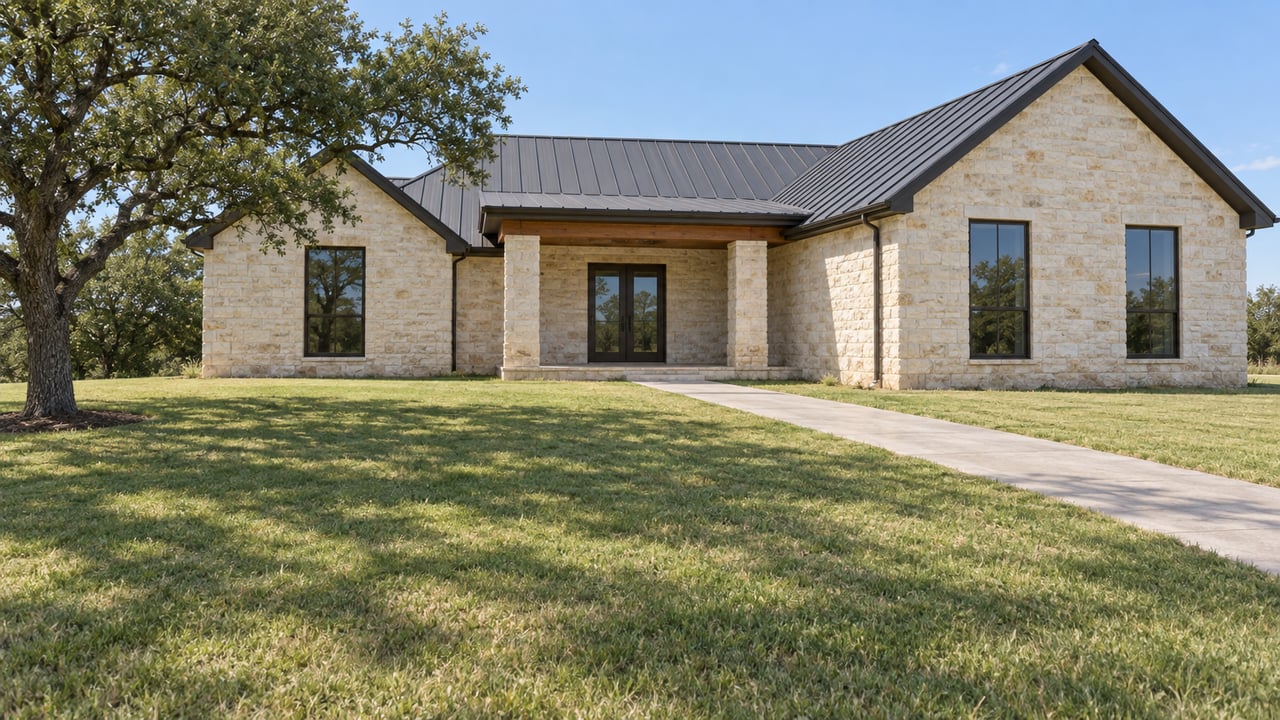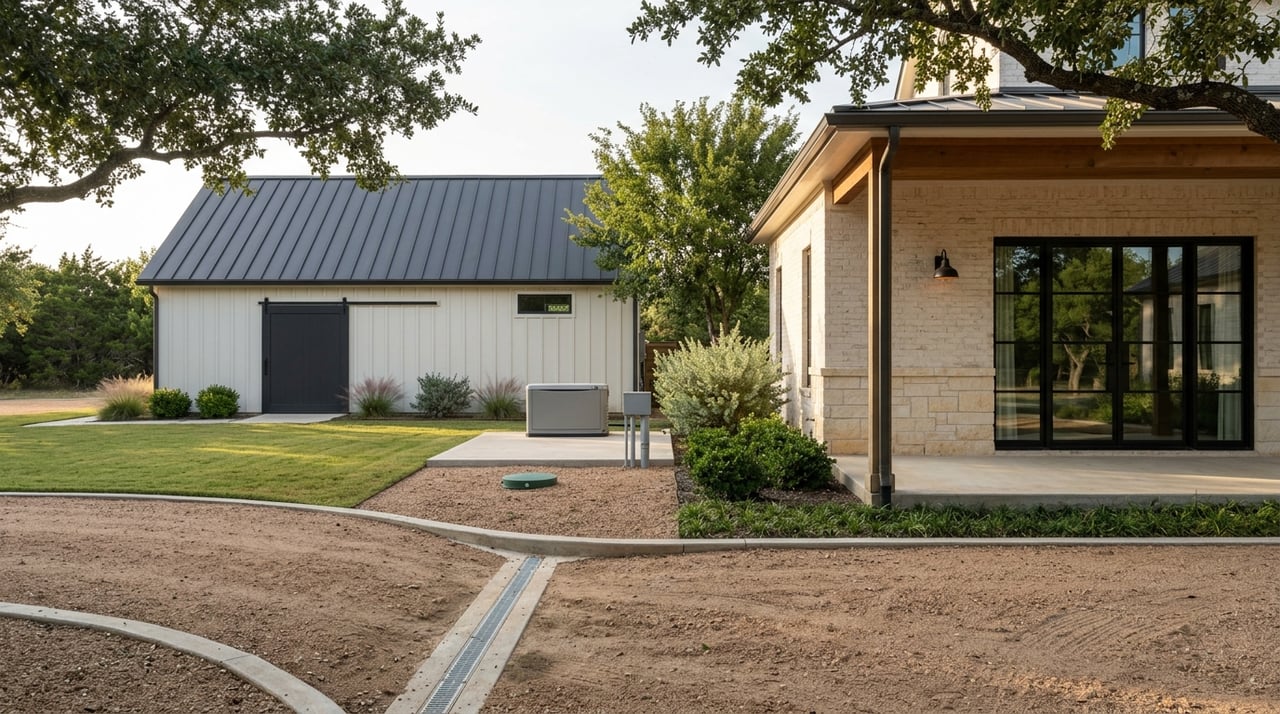
Looking at a small ranch or estate property in Bartonville can feel exciting right up until the details start stacking up. A beautiful home site, a barn, or a few acres of privacy may look straightforward at first, but acreage buying often comes down to zoning, access, utilities, septic, and land conditions. If you want to make a smart decision, you need to evaluate more than curb appeal. Let’s dive in.
Start With Bartonville Land Use
When you evaluate small ranch and estate properties in Bartonville, one of the first things to understand is the town’s long-range land-use framework. Bartonville’s 2043 Comprehensive Plan guides zoning, subdivision, thoroughfare construction, and growth management, and it includes RE-5, RE-2, and RE-1 categories with minimum lot sizes of 5 acres, 2 acres, and 1 acre.
That matters because not every acreage tract offers the same flexibility. The plan says future land use is meant to inform zoning and subdivision decisions, and proposed density should align with that framework. In some 1-acre areas, the plan states that single-family use is intended and agricultural uses may be considered inappropriate.
If you are dreaming about a guest house, barn, pool, second dwelling, or future split of the property, this step is essential. A parcel’s current setup may look promising, but the land-use designation and surrounding transition areas can shape what is realistic over time.
Watch Nearby Corridor Transitions
Bartonville’s plan also identifies rural business, general commercial, and higher-intensity residential areas near certain corridors. That means the edges of a neighborhood or estate area may feel different over time than interior properties.
For you as a buyer, proximity to those transition areas can affect privacy, traffic exposure, and long-term compatibility. If a property backs to or sits near a major corridor, it is worth understanding not only today’s setting but also the town’s broader planning direction.
Confirm Zoning And Plat Status
Acreage buyers should also confirm whether a property is already platted correctly and whether any future changes would trigger town approvals. Bartonville’s zoning and subdivision rules apply both inside the town and in its extraterritorial jurisdiction, known as the ETJ.
The town’s development ordinance says no subdivision plat may be recorded until a final plat is approved. It also says key permits and approvals cannot be issued until ordinance conditions are met. In practical terms, this means a property with land around it does not automatically equal easy development potential.
If part of your value equation depends on creating another lot later, adding major improvements, or repositioning the property for a future custom build, this is a place to slow down and verify the details before you close.
Look Beyond Road Frontage
Many buyers see road frontage and assume access is solved. In Bartonville, that can be an expensive assumption.
The town’s thoroughfare plan separates highways, collectors, and local streets, and each type affects access differently. FM 407 is identified as a high-capacity roadway with limited direct access, and curb cuts and driveway approaches are controlled.
So when you evaluate a property, ask more specific questions. Can you place or modify the driveway where you want? Does access depend on a shared drive? Could future road widening or right-of-way dedication reduce usable acreage?
Think About Daily Use And Future Change
The town says rights-of-way should be preserved during subdivision platting, including in the ETJ, and that the thoroughfare plan is a conceptual guide. That means the exact outcome may vary, but future circulation plans still deserve attention.
This is especially important if you plan to bring in trailers, service vehicles, or construction equipment. A property can feel private and spacious while still having access limitations that affect convenience and long-term value.
Verify Emergency Access
Bartonville says the Argyle Volunteer Fire District provides fire, rescue, and emergency medical services for the town. For larger home sites or hobby-ranch setups, access is not just about comfort. It is also about safety.
Road width, gate access, turnarounds, and the ability for larger vehicles to reach the home or barn should all be part of your review. A long driveway can be a great feature, but only if it works well in practice.
Check Utilities By Provider
Utility availability in Bartonville often looks different from a more urban neighborhood. The town lists CoServ Electric for electric service, CoServ Gas and Atmos Energy for gas, and water service through Argyle Water Supply Corp. and Cross Timbers Water Supply Corp.
Cross Timbers states that its service area includes most areas in Bartonville. Still, you should not rely on assumptions based on nearby homes or general reputation. The better question is whether this specific parcel already has meters, adequate service capacity, and a clear path for new connections.
That is especially true if you are considering a custom build, an accessory structure, or upgrades that increase utility demand. The difference between service being nearby and service being ready can be significant.
Treat Septic As A Major Due Diligence Item
For many Bartonville acreage properties, septic is one of the most important parts of the evaluation. The town has a local on-site sewage facility ordinance layered on top of state rules, and the process is detailed for a reason.
Bartonville says aerobic systems that require maintenance must have a maintenance contract with a licensed provider. Its septic FAQ also states those systems are inspected at least three times per year.
If the property already has a system, ask for the maintenance contract, inspection history, and available records before closing. If you plan to build, expand, or relocate improvements, confirm the site can support the intended septic layout.
Review The Site Conditions Early
Bartonville’s OSSF application requires a site survey, construction plans, floor plans for review, and a site evaluation that addresses soil texture, soil structure, groundwater, topography, flood hazards, easements, water wells, slope, and bodies of water.
That list is useful because it shows you exactly what can affect build-out. On smaller acreage, limited room for a drainfield can become a major issue if the soils, slope, or drainage are not favorable.
TCEQ guidance supports that same approach. OSSFs must be designed from a site evaluation based on local conditions, and permits are generally required before construction, installation, repair, extension, or alteration.
Understand Permit Requirements
In Bartonville, buyers should think beyond the house itself and review the permit path for planned improvements. The town says permits are required for new construction, additions, alterations, and repairs.
Its permit FAQ adds that permits are also required for items such as fences, culverts, approaches, driveways, plumbing, electrical work, water wells, propane tanks, and accessory buildings. That is a broad list, which makes early planning important.
The town also requires a grading and drainage plan approved by the Town Engineer for new residences, additions, accessory structures, and commercial structures over 1,500 square feet. If your vision includes a shop, barn, guest space, or expanded outdoor living, those requirements should be part of your due diligence from the start.
Evaluate The Land Itself
On a small ranch or estate property, the land can be just as important as the improvements. Bartonville’s septic review standards make clear that soil suitability, groundwater, slope, flood hazards, and nearby wells all matter.
That means you should pay close attention to drainage, ponding, topography, and usable build area. A beautiful parcel may not lay out as simply as it first appears once you account for setbacks, septic placement, and drainage patterns.
This is also where surveys and legal descriptions matter. DCAD notes that parcel data can draw from plats, deed records, road easements, and survey abstracts, but parcel dimensions shown on maps can be wrong. When acreage precision matters, recorded plats and deed documents control.
Verify Floodplain Risk Separately
Flood risk should be checked directly, not guessed from appearance. Bartonville’s flood damage prevention ordinance applies to all special flood hazard areas and requires a floodplain development permit for proposed development.
The ordinance adopts FEMA flood studies and maps for Denton County by reference. DCAD also notes that it does not maintain FEMA flood data itself.
So if floodplain status could affect your homesite, barn location, fencing, or drainage plan, verify it using the official FEMA layer and compare that information to the actual site plan. This step can help you avoid surprises after closing.
Be Careful With Ag Valuation Assumptions
A lot of buyers are drawn to acreage because they assume rural-looking land will automatically come with agricultural tax advantages. In Bartonville, that assumption needs to be tested carefully.
The Texas Comptroller says land must be currently devoted principally to agricultural use to the degree of intensity generally accepted in the area. It also must have been devoted to agricultural or timber production for at least five of the past seven years, and land inside an incorporated city or town must meet additional criteria.
If land receiving agricultural appraisal changes to a non-agricultural use, rollback taxes may apply. Wildlife management appraisal also has separate rules and only applies when the land already qualifies as open-space agricultural land and the owner actively uses at least three recognized wildlife-management practices.
For that reason, if ag valuation is part of your purchase decision, verify qualification with Denton Central Appraisal District instead of relying on the property’s appearance or a general assumption.
A Simple Bartonville Evaluation Checklist
Before you move forward on a small ranch or estate property in Bartonville, make sure you have answers to these core questions:
- Is the legal description consistent with the survey, deed records, and any recorded plats?
- What are the current zoning and future land-use designations?
- Does the intended use fit the property’s lot size category and planning context?
- How does access work for daily driving, trailers, deliveries, and emergency vehicles?
- Are there road easements, shared drives, or possible future right-of-way impacts?
- Which utility providers serve the parcel, and are meters or connections already in place?
- If the property uses septic, what records, maintenance history, and site data are available?
- Are there drainage concerns, floodplain issues, or grading constraints?
- Will planned improvements require town permits, drainage review, or other approvals?
- If tax treatment matters, has any agricultural valuation been confirmed with the appraisal district?
Why Local Guidance Matters
Bartonville properties can be incredibly rewarding for buyers who want space, privacy, and long-term lifestyle value. They can also come with more moving parts than a typical suburban purchase.
That is why the strongest acreage decisions are usually the most informed ones. When you understand land use, access, utilities, septic, drainage, and tax treatment before you buy, you put yourself in a much better position to protect both your lifestyle and your investment.
If you are weighing a Bartonville acreage purchase and want strategic guidance tailored to luxury homes, land, and estate property decisions, connect with The Agency - Ft. Worth.
FAQs
What should you check first when buying a small ranch property in Bartonville?
- Start with zoning, future land-use designation, legal boundaries, and access, because those factors shape what you can realistically do with the property.
How do septic rules affect Bartonville estate properties?
- Septic evaluation is a major due diligence item because Bartonville requires detailed site review, and aerobic systems that require maintenance must have a licensed maintenance contract with inspections at least three times per year.
Why does road frontage matter differently in Bartonville acreage purchases?
- Road frontage alone may not tell the full story because driveway placement, controlled access on roads like FM 407, shared drives, and future right-of-way needs can all affect usability.
How do you verify utility service for a Bartonville land or estate parcel?
- Confirm service by the actual provider for that parcel, ask whether meters already exist, and find out whether the site has adequate capacity and a clear path for connection.
Can you assume a Bartonville acreage property qualifies for agricultural valuation?
- No, because qualification depends on current agricultural use, history, intensity standards, and additional rules for land inside an incorporated town, so it should be verified with Denton Central Appraisal District.
How do you confirm floodplain status for Bartonville acreage?
- Check the official FEMA flood mapping referenced by Bartonville’s floodplain ordinance and compare it to the actual site plan before planning improvements or build locations.